What is a Power Purchase Agreement (PPA)?
In a context where energy transition is becoming a strategic imperative for businesses, the Power Purchase Agreement (PPA) is emerging as a key tool for securing renewable electricity supplies while controlling long-term costs.
This electricity purchase agreement directly links a renewable energy producer and an end consumer (business, industrial, Government / public agencies), guaranteeing a fixed price and a carbon-free source of energy.
This mechanism, already widely adopted in several European countries and the United States, is developing rapidly in France thanks to changes in the French regulatory framework and the growing appetite of organizations for sustainable and competitive solutions.
Definition : Power Purchase Agreement
A Power Purchase Agreement (PPA) is a long-term contract whereby a buyer (often a company) commits to purchasing electricity produced from renewable sources from a producer. The duration of these contracts generally varies between 5 and 20 years.
The main objective is twofold:
-
To secure the price of electricity over a long period of time, protecting against market fluctuations.
-
To reduce the carbon footprint of the business by consuming energy that is guaranteed to be 100% renewable.
Origin of the concept
The PPA model emerged in the 1980s in the United States, initially to facilitate the financing of large power plants. With the rise of renewable energies, it has established itself globally as a benchmark solution for guaranteeing stable outlets for producers and security of supply for consumers.
The different PPA models
| Type of PPA | Characteristics | Advantages | Ideal in the following situations |
|---|---|---|---|
| On-site PPA | Electricity generated directly on site (rooftop photovoltaic, parking Solar Carport) and energy produced consumed on site. | – Reduction in transmission losses – Visibility of production – Direct impact on the bill |
Industrial, logistics, or service sector sites with available space |
| Off-site PPA | Production in an off-site renewable energy plant, delivery via the grid. | – Access to large volumes – Geographic flexibility – Pooling possible |
Multi-site or high-consumption companies |
| Virtual or financial PPA | Financial contract without physical delivery, stabilization of electricity prices. | – Budget security – Energy diversification – No location constraints |
Companies seeking to secure prices or diversify their sources |
Power Purchase Agreements
A Power Purchase Agreement can take three main forms: On-site, Off-site, or Virtual (also known as a Financial PPA), each of which will get back to specific needs and constraints.
On-site PPA
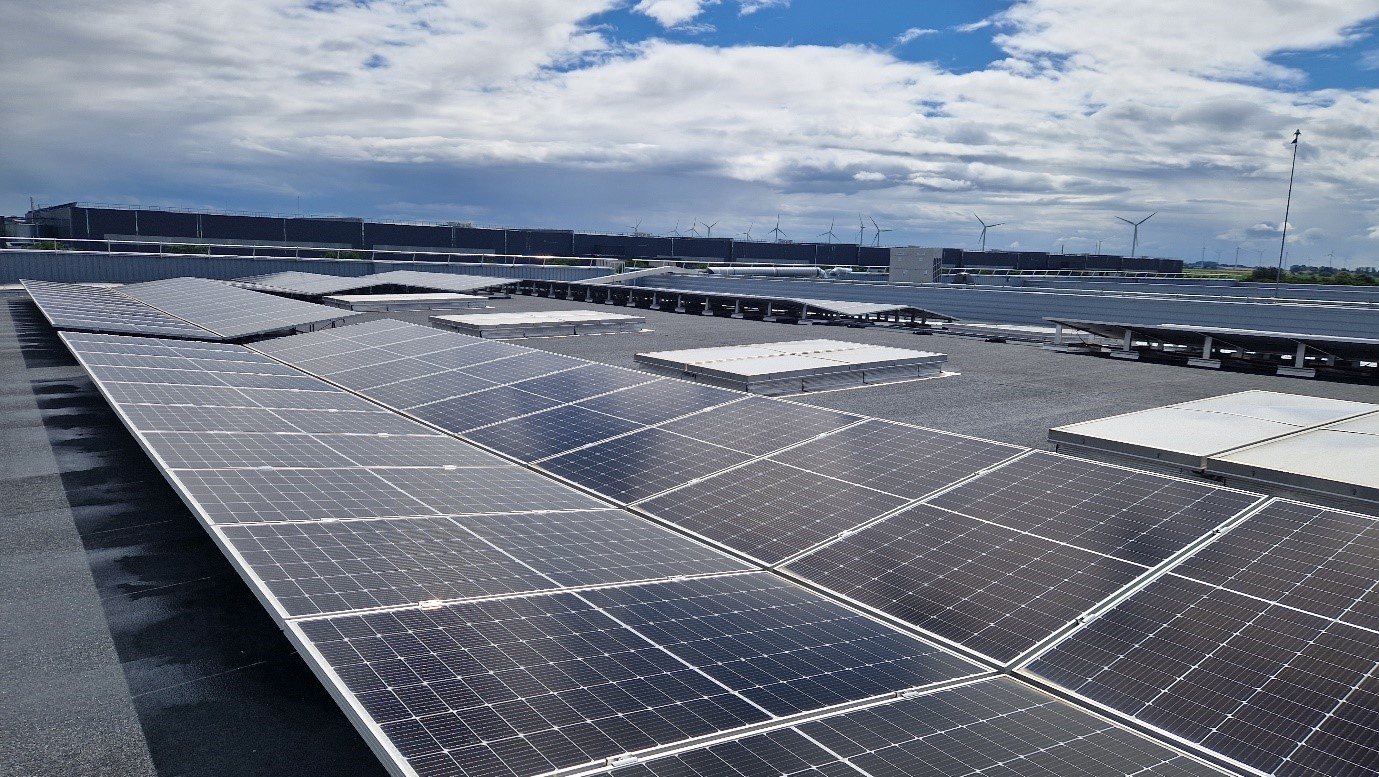
An On-site PPA involves installing a renewable electricity generation unit directly on the company’s site, for example on the rooftop of a building or in the form of parking Solar Carports. The electricity produced is then consumed on site, without passing through the public grid. This model is particularly suitable for industrial, logistics, or service sector sites with large usable areas, as it reduces transmission losses, provides real-time visibility of production, and has a direct impact on energy bills.
Off-site PPA
Off-site PPA, on the other hand, is based on electricity production in a renewable power plant located outside the consumer site. The energy is transmitted via the national electricity grid. This model allows for larger volumes than on-site and offers geographical flexibility. It is particularly popular with multi-site companies or those with very high electricity consumption, which can pool production with other buyers.
Virtual power purchase agreement (or financial PPA)
Finally, the virtual PPA, also known as a financial PPA, does not involve the physical delivery of electricity between the producer and the buyer. It is a purely financial contract in which both parties agree on a fixed price for a given period. Any differences between this price and the market price are compensated financially. This model is particularly useful for companies that want to stabilize their supply costs or diversify their energy sources without technical constraints related to the location of their facilities.
How does a Power Purchase Agreement work?
A Power Purchase Agreement (PPA) is a long-term bilateral contract between a renewable electricity producer and a buyer, often a company, industrial operator, or local authority. This contract sets out several key parameters upon signing:
-
The price of electricity, defined in advance, which may be fixed (guaranteed for the entire term) or indexed to certain energy market indicators.
-
The volume of electricity supplied, generally expressed in megawatt hours (MWh) per year, guaranteeing the buyer a stable supply in line with their needs.
-
The delivery model can be physical, on-site (On-site PPA) or off-site (Off-site PPA), or virtual as part of a financial PPA.
-
The commitment period, which generally varies from 5 to 20 years, offers long-term budget visibility.
-
Guarantees of origin certify that the electricity comes from renewable sources, in accordance with the system established by the European Union.
In an On-site PPA, energy is produced directly at the client’s facilities (rooftop photovoltaic, photovoltaic carport or solar farm) and consumed immediately, avoiding transmission losses.
In an off-site or virtual PPA, the electricity is fed into the national grid and the buyer receives the contractual quantity via a financial or physical compensation mechanism.
This approach not only secures the energy supply and controls costs, but also actively contributes to the energy transition and reduces the company’s carbon footprint.
Why enter into a PPA?
Signing a Power Purchase Agreement (PPA) is a strategic opportunity for any company wishing to secure its energy supply and accelerate its energy transition to renewable energies. In France, changes to the regulatory framework, particularly with the “loi Energie-Climat” (Energy-Climate Law), have paved the way for private PPAs, allowing producers and consumers to enter into contracts directly without going through a traditional supplier. This change has considerably broadened the range of possibilities, particularly for energy-intensive manufacturers, multi-site companies, and organizations with ambitious CO₂ emission reduction targets.
The advantages of a Power Purchase Agreement
-
Price security: PPAs allow the price of electricity to be fixed for the entire duration of the contract. This protects the company from market fluctuations and ensures budget stability.
-
Risk reduction: by contracting directly with a renewable energy producer, the company limits uncertainties related to supply, regulatory changes, and its environmental reputation.
-
Long-term projection: the contract offers financial and operational visibility over several years. This stability facilitates the planning of investments and energy strategies.
-
CSR and decarbonization commitment: by supporting renewable electricity production, the company demonstrates its concrete contribution to the energy transition and strengthens its brand image among clients and investors.
The limitations of a Power Purchase Agreement
-
Setup time: Negotiating and structuring a PPA can take several months. This delay is due to the technical and legal complexity of this type of contract.
-
Fixed prices: if the market price falls significantly, the company may end up paying more than the spot price. This is a risk that must be anticipated when signing the agreement.
-
Long-term commitment: a PPA often involves a term of 5 to 20 years. The company must therefore be certain that its energy needs will remain stable or grow over this period.
PPA solutions offered by GreenYellow
At GreenYellow, we offer Power Purchase Agreement (PPA) solutions tailored to our clients’ needs and integrated into our #SHIFTProduction offer, enabling them to benefit from PV plants without having to bear the initial investment costs .
We design, finance, install, and operate the power plant directly on their site, taking care of the entire project from A to Z.
There are two possible scenarios:
-
Self-consumption: you use the electricity produced by the plant directly on site, which reduces your carbon emissions and increases your energy independence. The energy is purchased from GreenYellow at a fixed, predefined rate for the entire duration of the contract, allowing you to secure your costs while consuming local, carbon-free electricity.
-
Grid injection: the electricity produced is sold to the grid, and GreenYellow pays you rent for the use of the land where the power plant is installed (in accordance with local regulations).
We also offer Corporate Power Purchase Agreements (CPPA), specifically designed for large companies and industrial consumers. In this model, GreenYellow designs and operates PV plants on land that may or may not belong to you, and the renewable electricity produced is fed into the grid. It is then used to supply green energy to the sites of your choice, via an electricity supplier.
The CPPA thus gives you access to local, clean, and competitive electricity, while strengthening your CSR commitments and sustainable development goals.
➡️Find out how to finance your PPA today on our Financing page
Conclusion
A Power Purchase Agreement (PPA) is much more than just an electricity purchase contract: it is a strategic tool for balancing competitiveness, energy security, and low-carbon transition.
By making a long-term commitment to a renewable energy producer, a company can anticipate market developments, reduce its risks, and assert its environmental responsibility.
➡️ Would you like to explore the possibility of setting up a PPA for your company?
Contact the GreenYellow teams now for personalized support and to turn your ambitions into concrete actions.
Selected clients’ references