
Electrification of end-uses: definition and challenges
The electrification of energy use is now emerging as one of the key pillars of the energy transition. Against the backdrop of the fight against climate change, volatile fossil fuel prices, and strengthened public policies, replacing fossil fuel-based energy use with low-carbon electricity is becoming a strategic driver for both businesses and regions.
But what exactly does the electrification of end-use applications entail? What are the challenges in France and Europe, and how can businesses actively engage in this effort? An in-depth look.
What is end-use electrification?
A simple definition of end-use electrification
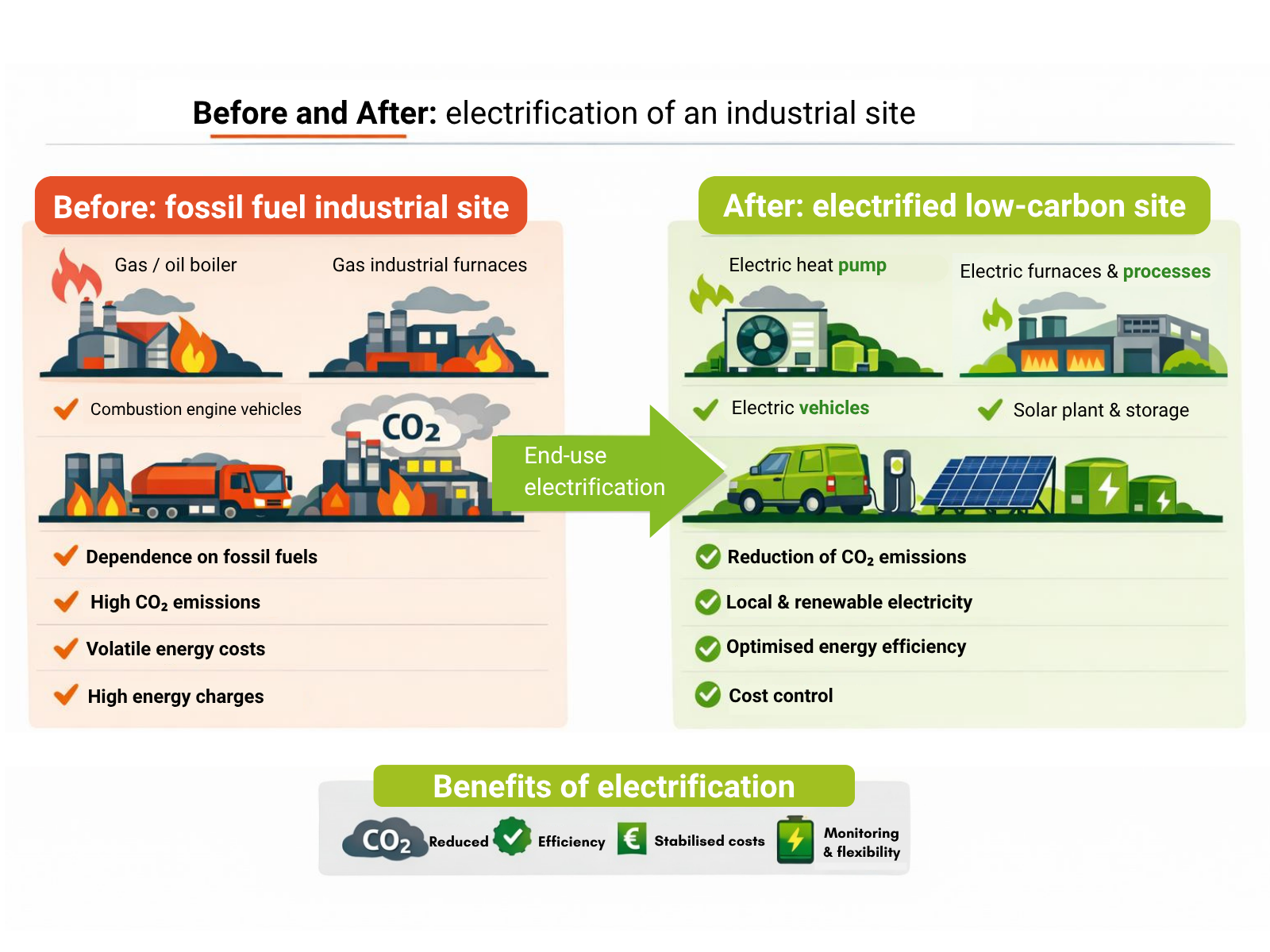
The electrification of energy uses involves replacing equipment that runs on fossil fuels (natural gas, fuel oil, coal) with technologies that use electricity. This electricity is all the more beneficial when it is generated from a low-carbon energy mix that includes a growing share of renewable energy.
It applies to all energy uses: heating, heat generation, transportation, industrial processes, cold storage, and air conditioning.
Concrete examples of electrification in key sectors
The electrification of end-use applications is leading to very tangible changes on the ground, whether in buildings, industrial activities, or transportation. It involves everyday equipment as well as more complex systems, all with a common goal: to reduce the use of fossil fuels in favor of more efficient and lower-carbon electric solutions.
- Replacing gas or oil-fired boilers with electric heat pumps
- Switching from internal combustion engine vehicles to electric vehicles
- Electrification of industrial processes (furnaces, motors, thermal processes)
- Deployment of solutions with high energy efficiency for refrigeration and air conditioning
Why replace gas and oil with electricity?
Fossil fuels account for a significant portion of greenhouse gas emissions. In contrast, France’s electricity sector already benefits from a low-carbon energy mix, and its decarbonization is expected to accelerate with the expansion of solar and wind power.
Electrification thus enables:
- A direct reduction in CO₂ emissions
- Improved energy efficiency of equipment
- Anticipation of regulatory constraints
- A reduction in dependence on imported fossil fuels
The challenges of end-use electrification in France and Europe
Decarbonisation and the carbon neutrality target by 2050
France and the European Union have committed to achieving carbon neutrality by 2050. According to scenarios from the CRE and RTE, this trajectory relies on a significant increase in electricity consumption, which could reach 470 TWh by 2030 and 505 TWh by 2035, compared to approximately 446.2 TWh in 2025 (according to RTE).
The electrification of end-use applications is therefore essential for sustainable decarbonization. Beyond industry and the service sector, the electrification of end-use applications affects many other sectors, with solutions tailored to their specific constraints:
- Transportation and electric mobility: electrification of light-duty and commercial vehicle fleets, electric buses and trucks, deployment of electric vehicle charging infrastructure at corporate sites.
- Logistics and warehouses: electric forklifts, electrified material handling systems, energy optimization of logistics buildings.
- Local authorities and public buildings: renovation of heating systems, electrification of street lighting, deployment of electric mobility solutions and charging stations
Reduction of greenhouse gas emissions
By replacing fossil fuel uses with low-carbon electric alternatives, electrification contributes significantly to reducing greenhouse gas emissions, particularly in the most carbon-intensive sectors.
Energy independence and regulatory framework
It is supported by:
- The Multi-Year Energy Plan (PPE 3 – 2026–2035)
- The European Green Deal
- Support mechanisms such as White certificates
👉 To find out more, check out our article: The PPE 3 (2026–2035): What Are the Challenges for Solar, Electrification, and Decarbonization?
What are the impacts of end-use electrification for businesses?
Industry: electrification of industrial processes and heat
In industry, electrification primarily involves:
- Electric furnaces
- Motors and production equipment
- Low and medium-temperature thermal processes
It helps improve energy efficiency while reducing the carbon footprint of industrial sites.
Tertiary sector: heating, cooling and energy efficiency
In the commercial sector, electrification relies on:
- Heat pumps
- Commercial refrigeration and high-efficiency air conditioning solutions
- Smart energy management
These drivers contribute to buildings’ energy efficiency and regulatory compliance (Commercial Sector Decree).
Other sectors affected by electrification
Beyond industry and the service sector, the electrification of end-use applications extends to many other sectors, with solutions tailored to their specific needs.
- Transportation and electric mobility: electrification of light-duty and commercial vehicle fleets, electric buses and trucks, and the deployment of electric vehicle charging infrastructure at corporate sites.
- Logistics and warehouses: electric forklifts, electrified material handling systems, energy optimization of logistics buildings.
- Municipalities and public buildings: renovation of heating systems, electrification of street lighting, deployment of electric mobility solutions and charging stations.
Electrification of end-uses and renewable energy: a lever for sustainable performance
Combining end-use electrification and solar self-consumption
Combining electrification with photovoltaic self-consumption makes it possible to:
- Sustainably reduce energy bills
- Secure part of the energy supply
- Improve the overall carbon footprint
The role of energy storage and management
Energy storage and management solutions enable you to:
- Smooth out consumption peaks
- Maximize the use of renewable energy
- Increase energy independence
- Optimize costs over the long term
Key figures and outlook for the electrification of end-use applications (2026–2050)
Trends in electricity consumption in France
According to ENEDIS, electricity’s share of final energy consumption could exceed 50% by 2050, compared with about 25% today.
RTE and CRE Scenarios for 2035
Forecasts indicate that electrification is a prerequisite for the widespread deployment of renewable electricity and the decarbonization of the energy mix.
Trends in electricity consumption in Europe
Across Europe, the electrification of end-use sectors is expected to lead to a significant increase in electricity consumption in the coming decades. According to scenarios from the European Union and grid operators, electricity demand could rise by 30 to 60% by 2050 (ENTSO-E, the European Network of Transmission System Operators), driven by the electrification of transportation, heating, and industrial processes.
This trend is accompanied by a massive expansion of renewable electricity generation and grid reinforcement to ensure security of supply and the integration of new applications. Electrification thus emerges as a central driver of the European energy strategy and the Green Deal.
👉 For more information, visit this link: European Energy Policies: 4 Key Points to Understand the Future of Businesses
How can you successfully implement an electrification project without an initial investment?
Key steps for launching an electrification initiative
- Energy audit of existing uses
- Identification of uses suitable for electrification
- Prioritization and roadmap
- Economic and carbon modeling
Funding, grants, and White certificates
Electrification projects may be eligible for third-party financing and government grants, thereby reducing the initial investment required by companies.
Case study: GreenYellow’s partnership
- Solar power generation
- Energy Efficiency
- Energy storage
- CAPEX-free financing
Conclusion: end-use electrification, a pillar of the energy transition
End-use electrification is an unavoidable structural transformation to achieve climate targets, strengthen energy independence and improve business competitiveness. Anticipating this transition today makes it possible to secure costs, reduce carbon footprint and prepare for the energy future.
📩 Ready to take action? Contact us

