
After Poland and Portugal, Jerónimo Martins renews its trust in GreenYellow to support its energy transition in Colombia
- A nearly 6 MWp multi-site solar program across 62 Ara stores and 2 distribution centers, expected to generate 8.3 GWh of renewable electricity annually – equivalent to the electricity consumption of 5,050 people in Colombia – and avoid nearly 4,875 metric tons of CO₂ emissions each year.
- At each of the two distribution centers, this on-site generation will cover about 20% of energy needs.
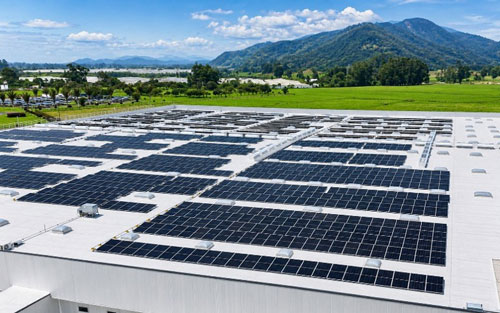
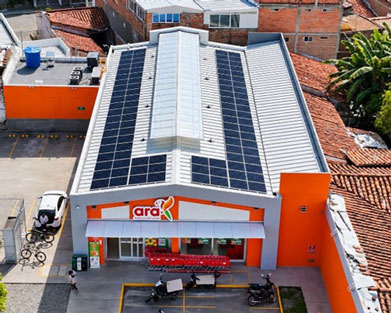
GreenYellow, an energy partner and industrial orchestrator of flexible electrification, is supporting Jerónimo Martins, a leading food retailer in Colombia, in the deployment of 64 rooftop solar projects (across 62 Ara supermarkets and 2 distribution centers). With nearly 5.7 MWp of installed capacity and estimated annual generation of 8.3 GWh, the program will help optimize the sites’ energy supply, manage electricity costs, and reduce their carbon footprint.
This new project builds on a long-standing relationship between the two groups, which are already partners in Poland and Portugal. It demonstrates GreenYellow’s ability to design and deploy energy solutions tailored to the needs of multi-site networks, taking into account consumption profiles, building characteristics, and the specific constraints of each location.
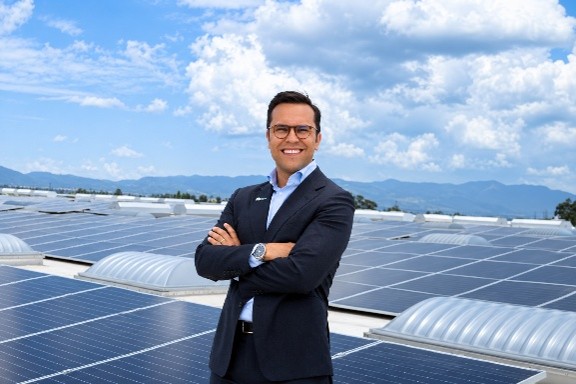
Gustavo Chaparro, Executive Director of Strategy and Transformation at GreenYellow Colombia, highlights the international dimension of the relationship between the two companies:
“Our relationship with Jerónimo Martins goes beyond borders. We are developing energy solutions for the group in markets such as Poland and Portugal, and Colombia is part of that same long-term vision. What makes this partnership particularly valuable is the opportunity to leverage our international experience and adapt it to the specific characteristics of the Colombian market, integrating different solar generation models to meet the needs of a large-scale retail business.”
A solar strategy tailored to the needs of Ara stores
Across the 62 Ara stores included in the program, the rooftop solar installations represent a combined capacity of 3.7 MWp and estimated annual generation of 5.3 GWh. This local generation is expected to avoid approximately 3,470 metric tons of CO₂ emissions each year. The projects combine rooftop solar installations for individual self-consumption, with the electricity generated being used directly by Ara stores, and collective self-consumption schemes, depending on the configuration of each site.
These projects are part of Jerónimo Martins’ broader program to integrate renewable energy across its Colombian network, which comprises more than 530 Ara supermarkets and 7 logistics centers.
By generating electricity closer to where it is consumed, the group is strengthening control over its energy spending and improving the predictability of its operating costs.
For Jerónimo Martins, the impact of these projects also extends to the day-to-day management of its stores and its ability to anticipate changes in the electricity market. David Chadid, Environmental Manager at Jerónimo Martins, explains:

“At Tiendas Ara, we are moving toward a more efficient energy model by installing solar systems on our store rooftops. This strategy allows us to optimize our energy consumption and management by making the most of local resources and reducing our reliance on traditional energy sources. Bringing these solutions to 62 stores represents a significant opportunity to improve operational efficiency, generate energy cost savings, and gain greater predictability in our energy expenses. It is an investment in a more competitive, more efficient operating model that is better prepared to meet the challenges of the future.”
Two distribution centers partially powered by solar energy
In addition to the stores, the program covers two strategic logistics facilities that supply the Ara network: the distribution centers in Gachancipá and Cota, in the department of Cundinamarca. These facilities handle the daily receipt, storage, and shipment of products to retail locations—operations that require a continuous electricity supply, particularly to ensure food preservation.
To help meet their electricity needs, both sites are now equipped with solar power plants, each covering approximately 20% of its energy consumption. In Gachancipá, the 900 installed panels (639 kWp) are expected to generate 978 MWh of electricity annually and avoid nearly 420 metric tons of CO₂ emissions. In Cota, the 1,957 panels (1.389 MWp) will generate 2,026 MWh per year and avoid nearly 985 metric tons of CO₂ emissions every year.
Delivering these installations required close coordination with Jerónimo Martins’ operational teams to ensure uninterrupted logistics operations throughout construction. Particular attention was paid to protecting the rooftops through non-penetrating mounting structures, as well as ensuring the safety of the installations.
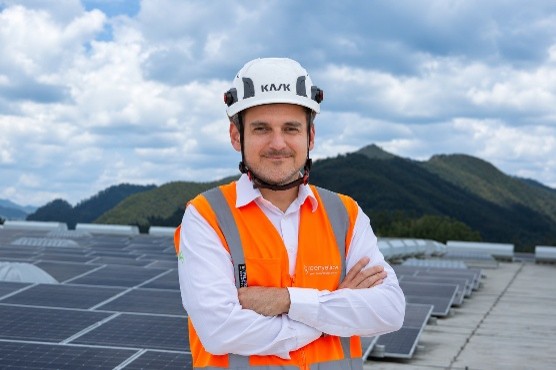
Jesús Rojas, Head of Solar PV at GreenYellow Colombia, reflects on the main technical challenges encountered during project delivery:
“One of the main challenges was installing the solar PV systems without disrupting the logistics operations at either distribution center. We had to address three key priorities: protecting the rooftops through non-penetrating mounting structures, ensuring the structural safety of the installations, and coordinating construction work with Jerónimo Martins Colombia’s teams to maintain business continuity. All of this had to be achieved within a demanding project timeline, which we successfully met through rigorous planning and close collaboration between our teams.”
Making energy a driver of competitiveness for multi-site networks
By combining solutions tailored to both retail stores and logistics facilities, GreenYellow is supporting Jerónimo Martins in implementing a consistent energy strategy across its network, without applying a one-size-fits-all solution to every site. This ability to scale deployment while accounting for local constraints is a key success factor for multi-site programs.
Paula Cortés, Director of the Gachancipá Distribution Center (CEDI) at Jerónimo Martins, highlights the importance of integrating these technologies into the center’s day-to-day operations:
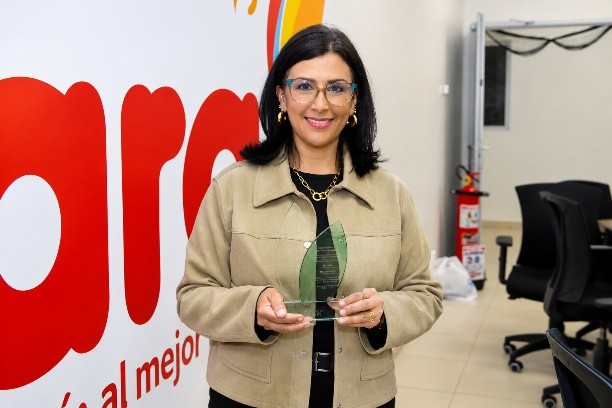
“This project marks an important step forward in the energy management of our CEDI Gachancipá distribution center. Together with GreenYellow, we have implemented a solution that allows us to harness solar energy, improve operational efficiency, and meet part of our electricity needs. For Jerónimo Martins, this is a strategic investment that combines innovation with operational performance, while strengthening the competitiveness and economic sustainability of our logistics operations.”
Pilar Yepes, General Manager of GreenYellow Colombia, adds:
“Jerónimo Martins is an example of a company that understands how today’s energy decisions shape its ability to respond to tomorrow’s challenges. In the face of climate variability scenarios, such as a potential El Niño event, having its own power generation enables the retailer to reduce its exposure to fluctuations in the electricity market and strengthen the resilience of its operations. We are talking about a logistics network that must meet the needs of thousands of consumers every day. Our goal is to make energy no longer an operational concern, but a strategic advantage for the business.”
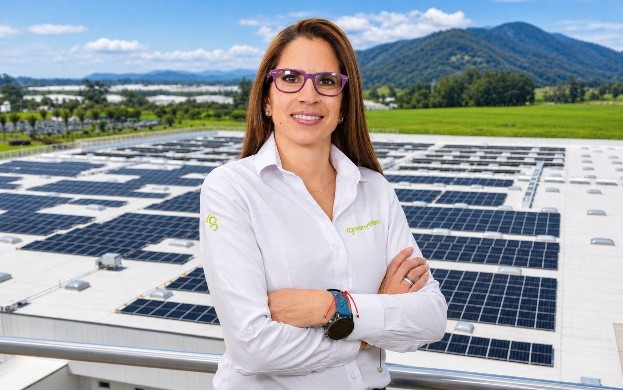
With this program in Colombia, GreenYellow confirms its expertise in orchestrating multi-site and multi-geographic energy projects. Relying on its local teams and international experience, the group supports trade and logistics players in controlling their energy costs, decarbonizing their operations, and evolving their energy systems.

